

Cash and Child Protection: How CTP Can Protect Children from Abuse Neglect Explotation and Violence - Livelihoods Centre


Agrégateur de contenus
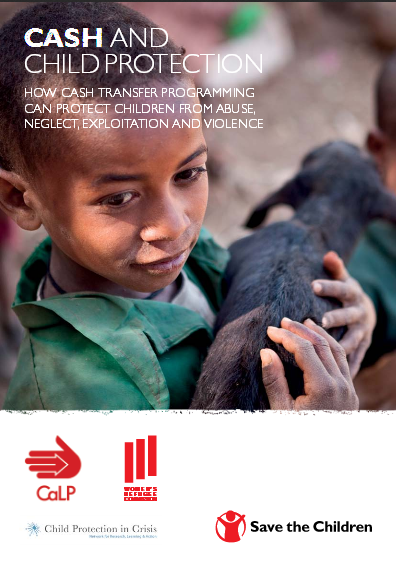
This discussion paper examines the links between cash transfers and the positive and negative outcomes for children ¿ in particular, the role cash transfers have played in protecting children from abuse, neglect, exploitation and violence. Our aim is to identify ways in which cash transfer activities could be designed to support the protection of children affected by emergencies.
This discussion paper examines the links between cash transfers and the positive and negative outcomes for children, in particular, the role cash transfers have played in protecting children from abuse, neglect, exploitation and violence.
Though it is often perceived as a new and innovative way of delivering assistance in emergencies, cash transfer programming in its various forms has been used since the Franco-Prussian war of 1870. On the other hand, child protection is a relatively new sector, with the first stand-alone child protection in emergencies (CPiE) programmes involving family tracing and reunification activities during the Rwandan genocide in 1994.
The frequent assumption that cash transfer programming primarily benefits livelihoods, food, nutrition and/or early recovery programmes means it has had only limited use in other sectors to date. Research into the potential impact in other sectors is thus under-explored. The use of cash transfers in a broad range of child protection activities, including child protection in emergencies, is a relatively new area of work. As a result, there is a lack of extensive guidance, standards and tools, which means that evidence on programme impact is often weaker than in other emergency response sectors. Furthermore, to date, very little cash transfer programming has been designed and implemented with the explicit intention of achieving child protection outcomes.
Available in English
- Organisation: Save the Children
- Pages: 40
- Année de publication: 2012
- Droit d'auteur: © The Save the Children Fund
- Url: https://resourcecentre.savethechildren.net/library/cash-and-child-protection-how-cash-transfer-programming-can-protect-children-abuse-neglect