
Bibliothèque virtuelle

Community Based Disaster Risk Reduction Study Key Determinants of a Successful CBDRR Programme.
Specifically, this report draws on the experience of the TRP CBDRR programmes and current literature in order to identify `the key determinants of a successful CBDRR project; including identification of the most effective interventions and and services (also in terms of sustainability) in the context of these key determinants.

Conservation Agriculture: Opportunities for Intensified Farming and Environmental Conservation in Dry Areas
This report by ICARDA presents examples, approaches and evidence on conservation agriculture and its potential for use in low-income countries. It is designed to help policy makers and development partners appreciate the issues and evaluate how conservation agriculture can contribute to rural development and food security goals, paving the way for its adoption as a national agricultural strategy.
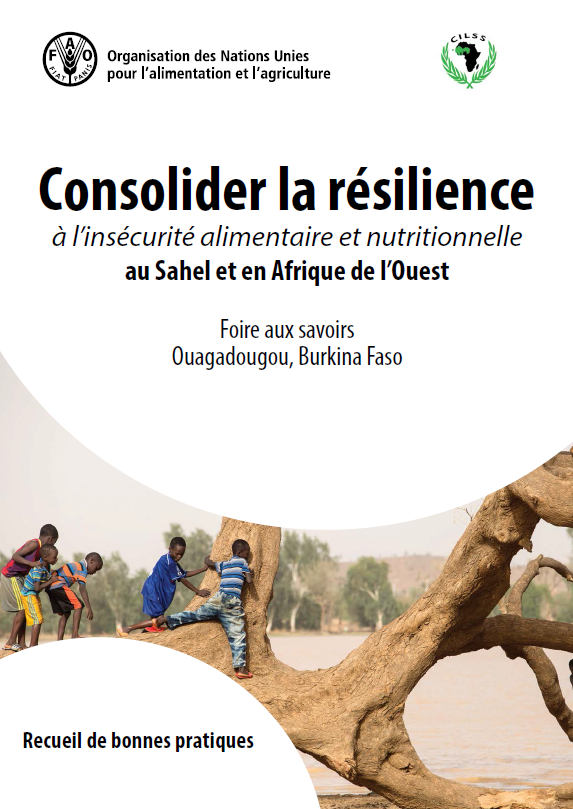
Consolider la résilience à l’insécurité alimentaire et nutritionnelle au Sahel et en Afrique de l’Ouest
Tant au Sahel que dans la Corne de l’Afrique, la situation alimentaire et nutritionnelle des hommes, femmes et enfants, menacée par des crises multiformes et récurrentes, reste une préoccupation majeure. Dans ce contexte, renforcer la résilience des ménages vulnérables est un impératif, qui se reflète dans les cadres stratégiques du CILSS, de l’IGAD et de la FAO.

Digital Savings Groups (DSG) Learning Brief
The Digital Savings Group Learning brief offers critical reflections on whether a savings group in the Uganda refugee response is ready to go digital, on the objectives for pursuing digitisation/digitalisation, and on key challenges in making the shift. The DSG Learning Brief has been developed in collaboration with the Uganda Inter-Agency Cash Working Group (CWG), the Livelihoods and Resilience Sector Working Group (LRSWG), and UNCDF as part of an on-going Financial Inclusion Learning Review series.

Disaster Risk Reduction and Livelihoods
Disasters affect over 200 million people annually, numbers increasing due to climate change, causing significant loss of lives, forced migration, and disruption of livelihoods and institutions. The trend over the past 15–20 years points to a greater frequency of environmental, climatic, political, and economic hazards and therefore a growing risk for vulnerable populations worldwide. Disaster Risk Reduction programs and policies contribute to reduce the effects of disasters or shift the burden outside the affected community, yet there exist many gaps and unanswered questions.

Emergency Food Security Interventions
This Good Practice Review explores programming practices in emergency food security. It provides a concise overview of conceptual issues and analytical and planning approaches, together with state-of-the-art programming practices in interventions designed to protect the food security of disaster - or crisis - affected groups.
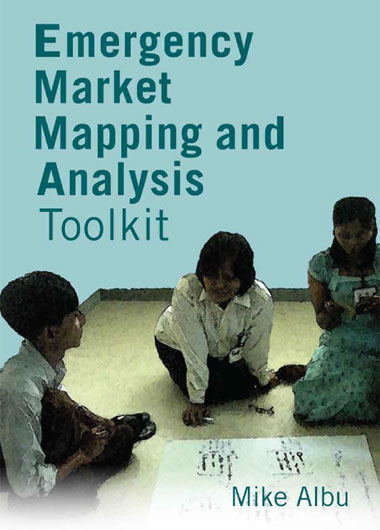
EMMA: Le Guide et Cartographie des Marches en Etat d’Urgence
EMMA est un ensemble d’outils et de notes d’orientation. EMMA encourage et aide le personnel se trouvant en première ligne, en cas d’urgence humanitaire soudaine, à mieux comprendre, accueillir et utiliser les systèmes de marché.
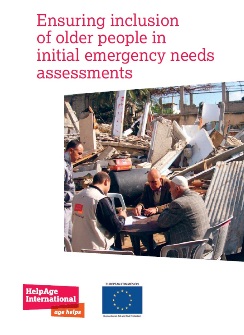
Ensuring Inclusion of Older People in Initial Emergency Needs Assessment
The aim of this guidance is to ensure that the specific vulnerabilities and capacities of older people in emergencies are fully taken into account as part of a thorough gender and age analysis of humanitarian needs.

Étude comparative de mécanismes de coordination d'espèces en situations d'urgence
L'objectif de cette étude comparative est d'élaborer, sur la base des leçons tirées, une meilleure coordination de programmes de transferts de fonds (CTP) pour les urgences à venir et d'aider à construire la stratégie de plaidoyer de la CaLP en matière de coordination d'espèces au niveau mondial.

Evaluación de Proyectos de Medios de Vida - Plan Especial Maremoto (PEM) en Sri Lanka
Cruz Roja Española tiene una amplia experiencia en los medios de subsistencia de programación, principalmente en América del Sur y Sudáfrica en los últimos veinte años.
Evaluating humanitarian action using the OECD-DAC criteria, An ALNAP guide for humanitarian agencies
This guide was developed after discussions within the evaluation community, and within ALNAP in particular, about how to strengthen evaluation of humanitarian practice, and how to foster more effective use of the Development Assistance Committee (DAC) evaluation criteria.
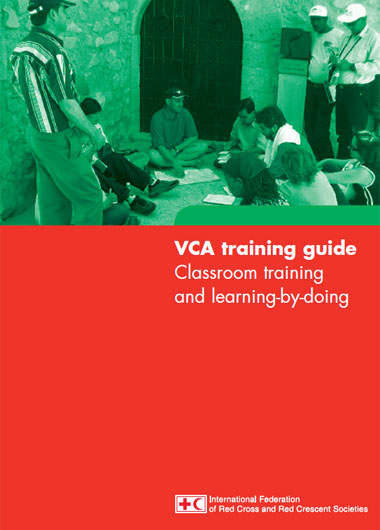
ÉVALUATION DES CAPACITÉS ET DE LA VULNÉRABILITÉ (ECV)
L'EVC permet aux Sociétés nationales de Croix-Rouge et du Croissant-Rouge de contextualiser chaque étape du cycle de programmation, afin d'assurer que celui-ci est bien axé sur les communautés. Par ce processus, l'EVC contribue à la responsabilisation des communautés en encourageant la prise de conscience des risques et en les incitant à s'approprier les mécanismes d'identification et de développement des solutions pour améliorer leur résilience.
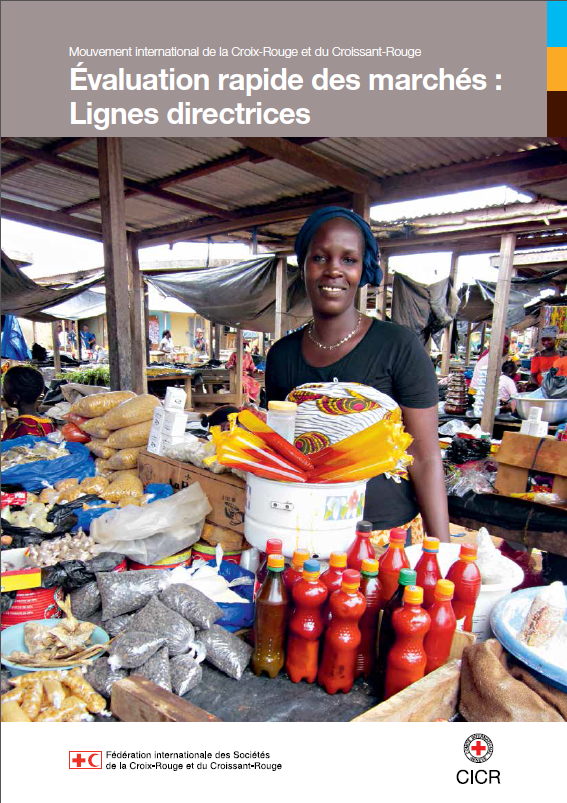
Évaluation rapide des marchés: Lignes directrices
Dans les économies de marché d’aujourd’hui, les moyens de subsistance dépendent dans une large mesure des systèmes de marché : les agriculteurs vendent leurs produits aux consommateurs, aux détaillants ou aux grossistes ; les artisans produisent divers biens et les ve ...
Final Evaluation of Livelihood Projects in the Post tsunami Recovery Operation in Sri Lanka
Spanish Red Cross has wide experience in livelihoods programming mainly in South America and South Africa over the last twenty years. However the projects that were developed in response to the impact of the Indian Ocean tsunami were the first time that the SRC used cash grants as a modality for its livelihoods work.

Fishing Sustainable Livelihood: A Discussion Paper on the Livelihood of Coastal Fisherwomen in India
This paper describes and discusses a project to improve the livelihood capacities of the tsunami affected fisherwomen in Srikakulam and East Godavari districts of Andhra Pradesh. The project applied a participatory approach: fisherwomen mobilized by IRCS volunteers took active part in the project at all stages. The paper highlights the project methodology, achievements and lessons for the future.
Food Assistance Convention
The Parties to this Convention, Confirming their continued commitment to the still valid objectives of the Food Aid Convention, 1999, to contribute to world food security, and to improve the ability of the international community to respond to emergency food situations and other food needs of developing countries.

Food Security & Livelihoods Programs -Tips for Protection Mainstreaming
Protection mainstreaming is the process of incorporating protection principles and promoting meaningful access, safety and dignity in humanitarian aid. This note aims to provide sector-specific measures to ensure that protection priorities are reflected in Food Security and Livelihoods (FSL) programs.
Food Security and Climate Change
This document assess the effects of climate change on food security and nutrition, with a focus on the most affected and vulnerable regions and populations and the interface between climate change and agricultural productivity, including the challenges and opportunities of adaptation and mitigation policies and actions for food security and nutrition.

Food Security and Livelihoods Interventions for Older People in Emergencies
This document aims to provide general guidance on implementing food security and livelihoods programmes for older people and other vulnerable groups in emergency situations.

Food security, sustaining peace and gender equality: conceptual framework and future directions
This study offers a framework to better understand how addressing the specific priorities of men and women in nutrition and food interventions in conflict-affected contexts may shape peacebuilding processes and improve gender equality in the aftermath of violent conflicts.

