
Bibliothèque virtuelle

(BIO) FUELING INJUSTICE? Europe´s responsability to counter climate charge without provoking land grabbing and compounding food insecurity in Africa
The European Union's biofuel policy continues to threaten food security and increase land grabs in Africa, shows a new report to be presented today in Brussels by the EuropAfrica platform and FIAN, '(Bio)fueling injustice: Europe's responsibility to counter climate change without provoking land grabbing and compounding food insecurity in Africa'.
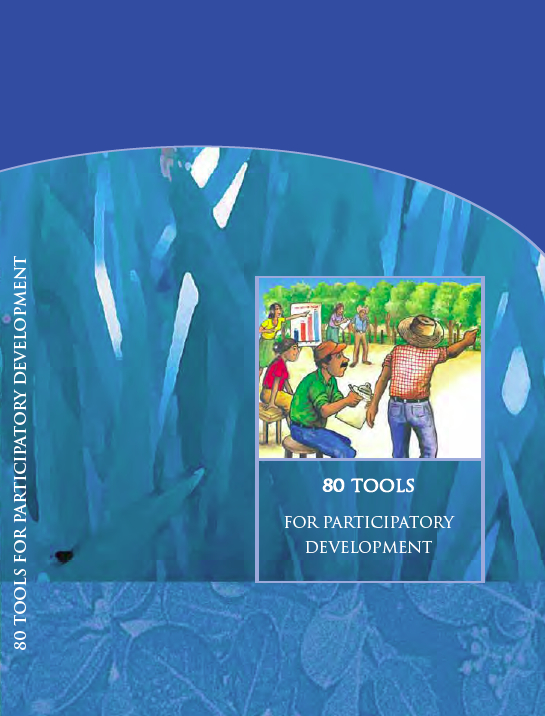
80 Tools for Participatory Development
It is neither a manual nor a recipe, but rather a set of tools that are presented with examples and in simple language, to make it easier to apply and adapt them to the actual conditions and experiences of rural communities.

A practical guide to Gender-sensitive Approaches for Disaster Management
These guidelines are intended to help Red Cross and Red Crescent National Societies and the International Federation of Red Cross and Red Crescent Societies (IFRC) incorporate effective gender-sensitive and inclusive approaches into their disaster management strategies when assisting communities prepare for, respond to, and recover from disasters.

ACAPS SEASONAL CALENDAR
First interactive calendar that displays seasonal events occurring in more than 90 countries during a typical year at national and subnational levels.
The interface provides details about crops’ growth cycles and lean seasons for the main crops cultivated in each country, to take into account seasonal hazards, seasonal events, and agricultural cycles more effectively. A strategic disaster risk management tool designed for humanitarian practitioners and decision-makers.

Activités de moyens d’existence intelligents face au climat sahélien
La Croix-Rouge britannique travaille au Sahel depuis 2016 aux côtés des 10 Sociétés Nationales de la région, qui constituent le groupe Sahel+, dans le domaine de la sécurité alimentaire et des moyens d’existence (SAME). Dans le cadre de son "Programme de prévention de la faim au Sahel" (2022-2024) puis du Programme Intégré de Résilience climatique et Migration (2025-2027) , l’organisation a intégré inévitablement une composante pour la promotion des moyens d’existence intelligents face au climat dans la région.
L'objectif est de promouvoir des interventions en matière de sécurité alimentaire et de moyens d'existence permettant aux populations de s'adapter aux changements actuels et futurs liés au climat.
Pour ce faire, la Croix-Rouge britannique propose ce guide qui recueille quelques bonnes pratiques, parfois innovantes, en matière de moyens d’existence adaptés au climat du Sahel.
Ce guide, qui s’appuie sur une bibliographie déjà riche, se veut le plus pratique possible de sorte que les Sociétés Nationales, ainsi que tout autre acteur local du développement, puissent s’y référer pour la mise en oeuvre de ce type d’actions.
Fichiers: GUIDE |

Anticipating and responding to shocks: livelihoods and humanitarian responses
Evidence on Demand supports the professional development of Climate, Environment, Infrastructure and Livelihoods Advisers at DFID. Technical Competency Frameworks for the advisory groups guide the support provided.

At the Root of Exodus: Food security, conflict and international migration
Drawing from quantitative and qualitative research, this new WFP VAM report concluded that food security is a critical factor impacting international migration with far-reaching implications for policy-makers and the wider humanitarian community. The study gave a voice to the people directly affected: more than 230 migrants, including refugees, were interviewed in Jordan, Lebanon, Turkey, Greece and Italy originating from 10 different countries: Afghanistan, Bangladesh, Egypt, Eritrea, Morocco, Nigeria, Senegal, Sudan, Syria and The Gambia. In addition, a mobile phone survey was conducted among 570 Syrian refugees.

CaLP 4th Global Learning Event: Global Innovations and Lessons Learned from Response in South and South-East Asia
The 4th CaLP Global Learning Event was held in Bangkok, Thailand on the 16th and 17th February 2011, hosted by the CaLP in partnership with the International Federation of the Red Cross and Red Crescent Societies (IFRC).

CaLP 5th Global Learning Event Final Report
CaLP's 5th Global Learning Event was organised in partnership with the International Federation of Red Cross and Red Crescent societies (IFRC).

Case Study: Türkiye Earthquake Operation - Livelihoods Recovery Programme
This case study provides details regarding the results of the Livelihoods Recovery Programme launched by IFRC and the Turkish Red Crescent in response to the earthquakes that caused massive loss of life and damage to homes and businesses in Turkey in February 2023.

Cash and Child Protection: How CTP Can Protect Children from Abuse Neglect Explotation and Violence
This discussion paper examines the links between cash transfers and the positive and negative outcomes for children ¿ in particular, the role cash transfers have played in protecting children from abuse, neglect, exploitation and violence.

Cash and livelihoods in contexts of conflict and fragility
Cash and livelihoods in contexts of conflict and fragility: implications for social assistance programming

Cash Transfer Programming in Urban Emergencies: A toolkit for practitioners
In recognition of the increasing urban populations around the world and their increasing vulnerability to disasters, the Cash Learning Partnership (CaLP) endeavored to investigate the current status and impact of urban emergency response programs that utilise cash transfer programming.

Cash Transfer Programming in Urban Emergencies: Tools (Annex 2)
This file contains the tools referenced as Annex 2 of the CaLP Urban Toolkit.

Characteristics of a safe and Resilient Community: Community Based Disaster Risk Reduction Study
Specifically, this report draws on the experience of the TRP Community Based Disaster Risk Reduction (CBDRR) programmes and current literature in order to identify the `characteristics of safe and resilient communities; to understand how these characteristics changed over time and how RCRC interventions have contributed to this change.

Child Safeguarding in Cash Transfer Programming. A Practical Tool
This practical tool enables you to make your cash transfer programming more accountable to children, by giving you guidance on how to prevent and respond to child protection incidents more effectively.

Climate Change Adaptation and Induced Farming Livelihoods.
The main objective of the research was to assess and analyse farmers perceptions and responses and/or adaptations to climate change in Lake Tana Basin and agro-pastoralist areas of Oromiya and Amhara Regional States.

Climate risk impacts on employment opportunities for youth in Pakistan
This survey repot aims to understand how climate-related risks and hazards are reshaping traditional avenues of job entry and employment, particularly
for young people in Pakistan. Based on the findings, recommendations are made on how social protection programmes could support the youth of Pakistan to navigate the changing nature of the labour market. Social protection interventions can help individuals to cope with the risks they
face over their lifetime, such as unemployment or disability. One element of this support is improving employment and livelihood outcomes (McCord, 2018).
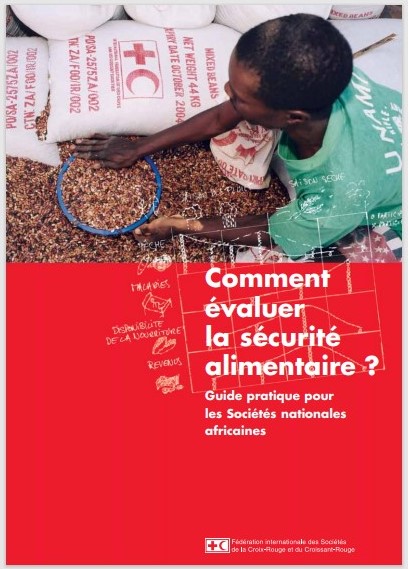
Comment évaluer la sécurité alimentaire ? Guide pratique de la FICR pour les Sociétés nationales africaines
Ce guide est un outil pratique destiné à aider les Sociétés nationales (SN) à effectuer une évaluation initiale de la sécurité alimentaire. C'est un outil pratique et son utilisation ne nécessite pas de connaissances ou d'expérience préalables en matière de sécurité alimentaire. Le guide peut être utilisé aussi bien en milieu rural que dans les agglomérations urbaines.
Comment mettre en œuvre une activité génératrice de revenus (AGR) dans le cadre d’un microprojet ?
Guide méthodologique #4 de l'Agence des Micro Projets. Un guide pratique pour accompagner les associations dans la mise en place d’activités génératrices de revenus (AGR).

Community Based Disaster Risk Reduction Study Key Determinants of a Successful CBDRR Programme.
Specifically, this report draws on the experience of the TRP CBDRR programmes and current literature in order to identify `the key determinants of a successful CBDRR project; including identification of the most effective interventions and and services (also in terms of sustainability) in the context of these key determinants.

Conservation Agriculture: Opportunities for Intensified Farming and Environmental Conservation in Dry Areas
This report by ICARDA presents examples, approaches and evidence on conservation agriculture and its potential for use in low-income countries. It is designed to help policy makers and development partners appreciate the issues and evaluate how conservation agriculture can contribute to rural development and food security goals, paving the way for its adoption as a national agricultural strategy.
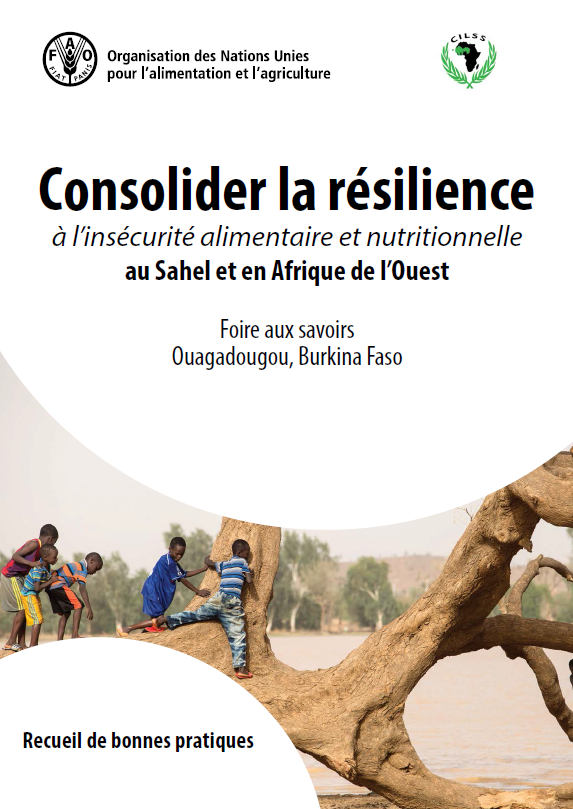
Consolider la résilience à l’insécurité alimentaire et nutritionnelle au Sahel et en Afrique de l’Ouest
Tant au Sahel que dans la Corne de l’Afrique, la situation alimentaire et nutritionnelle des hommes, femmes et enfants, menacée par des crises multiformes et récurrentes, reste une préoccupation majeure. Dans ce contexte, renforcer la résilience des ménages vulnérables est un impératif, qui se reflète dans les cadres stratégiques du CILSS, de l’IGAD et de la FAO.

Digital Savings Groups (DSG) Learning Brief
The Digital Savings Group Learning brief offers critical reflections on whether a savings group in the Uganda refugee response is ready to go digital, on the objectives for pursuing digitisation/digitalisation, and on key challenges in making the shift. The DSG Learning Brief has been developed in collaboration with the Uganda Inter-Agency Cash Working Group (CWG), the Livelihoods and Resilience Sector Working Group (LRSWG), and UNCDF as part of an on-going Financial Inclusion Learning Review series.

Disaster Risk Reduction and Livelihoods
Disasters affect over 200 million people annually, numbers increasing due to climate change, causing significant loss of lives, forced migration, and disruption of livelihoods and institutions. The trend over the past 15–20 years points to a greater frequency of environmental, climatic, political, and economic hazards and therefore a growing risk for vulnerable populations worldwide. Disaster Risk Reduction programs and policies contribute to reduce the effects of disasters or shift the burden outside the affected community, yet there exist many gaps and unanswered questions.

Emergency Food Security Interventions
This Good Practice Review explores programming practices in emergency food security. It provides a concise overview of conceptual issues and analytical and planning approaches, together with state-of-the-art programming practices in interventions designed to protect the food security of disaster - or crisis - affected groups.
EMMA: Le Guide et Cartographie des Marches en Etat d’Urgence
EMMA est un ensemble d’outils et de notes d’orientation. EMMA encourage et aide le personnel se trouvant en première ligne, en cas d’urgence humanitaire soudaine, à mieux comprendre, accueillir et utiliser les systèmes de marché.
Ensuring Inclusion of Older People in Initial Emergency Needs Assessment
The aim of this guidance is to ensure that the specific vulnerabilities and capacities of older people in emergencies are fully taken into account as part of a thorough gender and age analysis of humanitarian needs.

Étude comparative de mécanismes de coordination d'espèces en situations d'urgence
L'objectif de cette étude comparative est d'élaborer, sur la base des leçons tirées, une meilleure coordination de programmes de transferts de fonds (CTP) pour les urgences à venir et d'aider à construire la stratégie de plaidoyer de la CaLP en matière de coordination d'espèces au niveau mondial.

Evaluación de Proyectos de Medios de Vida - Plan Especial Maremoto (PEM) en Sri Lanka
Cruz Roja Española tiene una amplia experiencia en los medios de subsistencia de programación, principalmente en América del Sur y Sudáfrica en los últimos veinte años.
Evaluating humanitarian action using the OECD-DAC criteria, An ALNAP guide for humanitarian agencies
This guide was developed after discussions within the evaluation community, and within ALNAP in particular, about how to strengthen evaluation of humanitarian practice, and how to foster more effective use of the Development Assistance Committee (DAC) evaluation criteria.
ÉVALUATION DES CAPACITÉS ET DE LA VULNÉRABILITÉ (ECV)
L'EVC permet aux Sociétés nationales de Croix-Rouge et du Croissant-Rouge de contextualiser chaque étape du cycle de programmation, afin d'assurer que celui-ci est bien axé sur les communautés. Par ce processus, l'EVC contribue à la responsabilisation des communautés en encourageant la prise de conscience des risques et en les incitant à s'approprier les mécanismes d'identification et de développement des solutions pour améliorer leur résilience.
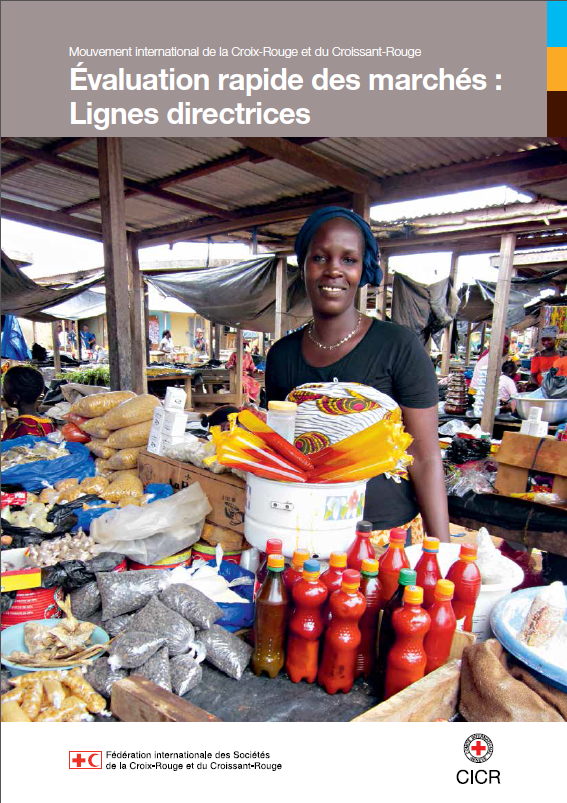
Évaluation rapide des marchés: Lignes directrices
Dans les économies de marché d’aujourd’hui, les moyens de subsistance dépendent dans une large mesure des systèmes de marché : les agriculteurs vendent leurs produits aux consommateurs, aux détaillants ou aux grossistes ; les artisans produisent divers biens et les ve ...
Final Evaluation of Livelihood Projects in the Post tsunami Recovery Operation in Sri Lanka
Spanish Red Cross has wide experience in livelihoods programming mainly in South America and South Africa over the last twenty years. However the projects that were developed in response to the impact of the Indian Ocean tsunami were the first time that the SRC used cash grants as a modality for its livelihoods work.

Fishing Sustainable Livelihood: A Discussion Paper on the Livelihood of Coastal Fisherwomen in India
This paper describes and discusses a project to improve the livelihood capacities of the tsunami affected fisherwomen in Srikakulam and East Godavari districts of Andhra Pradesh. The project applied a participatory approach: fisherwomen mobilized by IRCS volunteers took active part in the project at all stages. The paper highlights the project methodology, achievements and lessons for the future.
Food Assistance Convention
The Parties to this Convention, Confirming their continued commitment to the still valid objectives of the Food Aid Convention, 1999, to contribute to world food security, and to improve the ability of the international community to respond to emergency food situations and other food needs of developing countries.

Food Security & Livelihoods Programs -Tips for Protection Mainstreaming
Protection mainstreaming is the process of incorporating protection principles and promoting meaningful access, safety and dignity in humanitarian aid. This note aims to provide sector-specific measures to ensure that protection priorities are reflected in Food Security and Livelihoods (FSL) programs.
Food Security and Climate Change
This document assess the effects of climate change on food security and nutrition, with a focus on the most affected and vulnerable regions and populations and the interface between climate change and agricultural productivity, including the challenges and opportunities of adaptation and mitigation policies and actions for food security and nutrition.

Food Security and Livelihoods Interventions for Older People in Emergencies
This document aims to provide general guidance on implementing food security and livelihoods programmes for older people and other vulnerable groups in emergency situations.

Food security, sustaining peace and gender equality: conceptual framework and future directions
This study offers a framework to better understand how addressing the specific priorities of men and women in nutrition and food interventions in conflict-affected contexts may shape peacebuilding processes and improve gender equality in the aftermath of violent conflicts.

