
Biblioteca virtual

(BIO) FUELING INJUSTICE? Europe´s responsability to counter climate charge without provoking land grabbing and compounding food insecurity in Africa
The European Union's biofuel policy continues to threaten food security and increase land grabs in Africa, shows a new report to be presented today in Brussels by the EuropAfrica platform and FIAN, '(Bio)fueling injustice: Europe's responsibility to counter climate change without provoking land grabbing and compounding food insecurity in Africa'.

80 Herramientas para el Desarrollo Participativo
No es un manual sino un conjunto de herramientas que se presentan con ejemplos y en un lenguaje sencillo, para facilitar su aplicación y adaptación a las condiciones y experiencias reales de las comunidades rurales.

A practical guide to Gender-sensitive Approaches for Disaster Management
These guidelines are intended to help Red Cross and Red Crescent National Societies and the International Federation of Red Cross and Red Crescent Societies (IFRC) incorporate effective gender-sensitive and inclusive approaches into their disaster management strategies when assisting communities prepare for, respond to, and recover from disasters.

ACAPS SEASONAL CALENDAR
First interactive calendar that displays seasonal events occurring in more than 90 countries during a typical year at national and subnational levels.
The interface provides details about crops’ growth cycles and lean seasons for the main crops cultivated in each country, to take into account seasonal hazards, seasonal events, and agricultural cycles more effectively. A strategic disaster risk management tool designed for humanitarian practitioners and decision-makers.

Acción Humanitaria en Emergencias Relacionadas con las Sequías
Este documento de enseñanzas de ALNAP recoge 17 lecciones aprendidas sobre Acción Humanitaria en Emergencias Relacionadas con las Sequías.

Activités de moyens d’existence intelligents face au climat sahélien
La Croix-Rouge britannique travaille au Sahel depuis 2016 aux côtés des 10 Sociétés Nationales de la région, qui constituent le groupe Sahel+, dans le domaine de la sécurité alimentaire et des moyens d’existence (SAME). Dans le cadre de son "Programme de prévention de la faim au Sahel" (2022-2024) puis du Programme Intégré de Résilience climatique et Migration (2025-2027) , l’organisation a intégré inévitablement une composante pour la promotion des moyens d’existence intelligents face au climat dans la région.
L'objectif est de promouvoir des interventions en matière de sécurité alimentaire et de moyens d'existence permettant aux populations de s'adapter aux changements actuels et futurs liés au climat.
Pour ce faire, la Croix-Rouge britannique propose ce guide qui recueille quelques bonnes pratiques, parfois innovantes, en matière de moyens d’existence adaptés au climat du Sahel.
Ce guide, qui s’appuie sur une bibliographie déjà riche, se veut le plus pratique possible de sorte que les Sociétés Nationales, ainsi que tout autre acteur local du développement, puissent s’y référer pour la mise en oeuvre de ce type d’actions.
Ficheros: GUIDE |

ANÁLISIS DE VULNERABILIDAD Y CAPACIDAD (AVC): Manual de formación sobre el AVC
El VCA permite a las Sociedades Nacionales de la Cruz Roja y de la Media Luna Roja contextualizar cada paso del ciclo de programación para asegurar que se centre en las comunidades. A través de este proceso, los AVC ayudan a potenciar a las comunidades manteniéndolas informadas sobre riesgos y desarrollando una apropiación de la identificación y desarrollo de soluciones para aumentar la resiliencia.

Análisis social para proyectos de inversión agrícola y rura
Si bien ya existen numerosos manuales y guías del usuario sobre el análisis social, en la mayoría se descuida la cuestión de su aplicación en la inversión agrícola y rural. Para subsanar esta carencia, la TCI de la Organización de las Naciones Unidas para la Alimentación y la Agricultura (FAO) ha elaborado tres guías complementarias en una serie titulada "El análisis social para los proyectos de inversión agrícola y rural".

Análisis y Mapeo de Mercado en Emergencia (EMMA) caja de herramientas
El EMMA es un conjunto de herramientas y notas orientadoras; constituye un estímulo y un apoyo para que, en caso de emergencias de aparición repentina, el personal humanitario en el terreno pueda comprender mejor, ajustar y hacer buen uso de los sistemas de mercado.

Anticipating and responding to shocks: livelihoods and humanitarian responses
Evidence on Demand supports the professional development of Climate, Environment, Infrastructure and Livelihoods Advisers at DFID. Technical Competency Frameworks for the advisory groups guide the support provided.

Asegurando la inclusión de las personas mayores en la evaluación inicial de necesidades en emergencias
El objetivo de esta guía es asegurar que las vulnerabilidades y capacidades de las personas mayores en situación de emergencia, sean tomadas en cuenta como parte del análisis de necesidades humanitarias en cuanto a género y edad.

At the Root of Exodus: Food security, conflict and international migration
Drawing from quantitative and qualitative research, this new WFP VAM report concluded that food security is a critical factor impacting international migration with far-reaching implications for policy-makers and the wider humanitarian community. The study gave a voice to the people directly affected: more than 230 migrants, including refugees, were interviewed in Jordan, Lebanon, Turkey, Greece and Italy originating from 10 different countries: Afghanistan, Bangladesh, Egypt, Eritrea, Morocco, Nigeria, Senegal, Sudan, Syria and The Gambia. In addition, a mobile phone survey was conducted among 570 Syrian refugees.

AVC: Caja de herramientas con fichas de referencia
Este documento es una guía práctica y sencilla para el personal y los voluntarios de las Sociedades Nacionales que deseen emprender un AVC a nivel local como parte de la estrategia de sus programas comunitarios.

CaLP 4th Global Learning Event: Global Innovations and Lessons Learned from Response in South and South-East Asia
The 4th CaLP Global Learning Event was held in Bangkok, Thailand on the 16th and 17th February 2011, hosted by the CaLP in partnership with the International Federation of the Red Cross and Red Crescent Societies (IFRC).

CaLP 5th Global Learning Event Final Report
CaLP's 5th Global Learning Event was organised in partnership with the International Federation of Red Cross and Red Crescent societies (IFRC).

Case Study: Türkiye Earthquake Operation - Livelihoods Recovery Programme
This case study provides details regarding the results of the Livelihoods Recovery Programme launched by IFRC and the Turkish Red Crescent in response to the earthquakes that caused massive loss of life and damage to homes and businesses in Turkey in February 2023.

Cash and Child Protection: How CTP Can Protect Children from Abuse Neglect Explotation and Violence
This discussion paper examines the links between cash transfers and the positive and negative outcomes for children ¿ in particular, the role cash transfers have played in protecting children from abuse, neglect, exploitation and violence.

Cash and livelihoods in contexts of conflict and fragility
Cash and livelihoods in contexts of conflict and fragility: implications for social assistance programming

Cash Transfer Programming in Urban Emergencies: A toolkit for practitioners
In recognition of the increasing urban populations around the world and their increasing vulnerability to disasters, the Cash Learning Partnership (CaLP) endeavored to investigate the current status and impact of urban emergency response programs that utilise cash transfer programming.

Cash Transfer Programming in Urban Emergencies: Tools (Annex 2)
This file contains the tools referenced as Annex 2 of the CaLP Urban Toolkit.

Characteristics of a safe and Resilient Community: Community Based Disaster Risk Reduction Study
Specifically, this report draws on the experience of the TRP Community Based Disaster Risk Reduction (CBDRR) programmes and current literature in order to identify the `characteristics of safe and resilient communities; to understand how these characteristics changed over time and how RCRC interventions have contributed to this change.

Child Safeguarding in Cash Transfer Programming. A Practical Tool
This practical tool enables you to make your cash transfer programming more accountable to children, by giving you guidance on how to prevent and respond to child protection incidents more effectively.

Climate Change Adaptation and Induced Farming Livelihoods.
The main objective of the research was to assess and analyse farmers perceptions and responses and/or adaptations to climate change in Lake Tana Basin and agro-pastoralist areas of Oromiya and Amhara Regional States.

Climate risk impacts on employment opportunities for youth in Pakistan
This survey repot aims to understand how climate-related risks and hazards are reshaping traditional avenues of job entry and employment, particularly
for young people in Pakistan. Based on the findings, recommendations are made on how social protection programmes could support the youth of Pakistan to navigate the changing nature of the labour market. Social protection interventions can help individuals to cope with the risks they
face over their lifetime, such as unemployment or disability. One element of this support is improving employment and livelihood outcomes (McCord, 2018).

Comment mettre en œuvre une activité génératrice de revenus (AGR) dans le cadre d’un microprojet ?
Guide méthodologique #4 de l'Agence des Micro Projets. Un guide pratique pour accompagner les associations dans la mise en place d’activités génératrices de revenus (AGR).

Community Based Disaster Risk Reduction Study Key Determinants of a Successful CBDRR Programme.
Specifically, this report draws on the experience of the TRP CBDRR programmes and current literature in order to identify `the key determinants of a successful CBDRR project; including identification of the most effective interventions and and services (also in terms of sustainability) in the context of these key determinants.

Comparative Study of Emergency Cash Coordination Mechanism
The objective of this comparative study is to draw on lessons learnt for better coordination of cash transfer programmes (CTP) in future emergencies and to help build the CaL's advocacy strategy on cash coordination at global level.

Conservation Agriculture: Opportunities for Intensified Farming and Environmental Conservation in Dry Areas
This report by ICARDA presents examples, approaches and evidence on conservation agriculture and its potential for use in low-income countries. It is designed to help policy makers and development partners appreciate the issues and evaluate how conservation agriculture can contribute to rural development and food security goals, paving the way for its adoption as a national agricultural strategy.

Convenio sobre Asistencia Alimentaria
Las partes en el presente convenio, confirman su continuo compromiso en pro de los objetivos aún válidos del Convenio sobre Ayuda Alimentaria de 1999 de contribuir a la seguridad alimentaria mundial y mejorar la capacidad de la comunidad internacional para responder a las situaciones de emergencia alimentaria y a otras necesidades alimentarias de los países en desarrollo.

Digital Savings Groups (DSG) Learning Brief
The Digital Savings Group Learning brief offers critical reflections on whether a savings group in the Uganda refugee response is ready to go digital, on the objectives for pursuing digitisation/digitalisation, and on key challenges in making the shift. The DSG Learning Brief has been developed in collaboration with the Uganda Inter-Agency Cash Working Group (CWG), the Livelihoods and Resilience Sector Working Group (LRSWG), and UNCDF as part of an on-going Financial Inclusion Learning Review series.

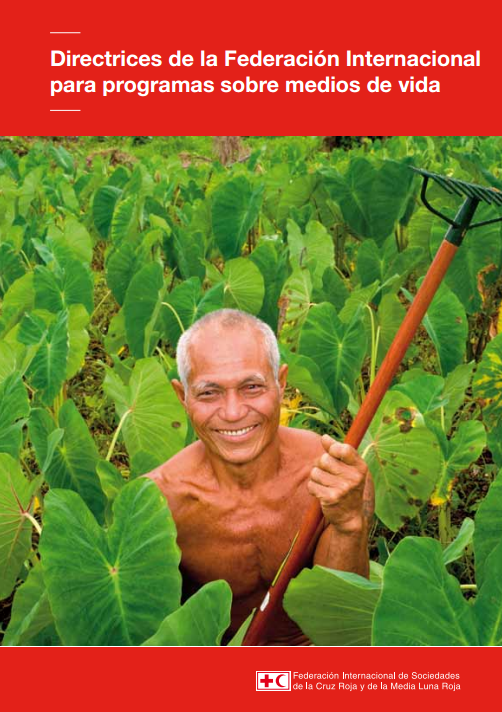
Directrices de la Federación Internacional para Programas sobre Medios de Vida
Estas directrices están destinadas a los responsables de programas y personal sobre el terreno que deseen emprender o mejorar programas de medios de vida dentro del contexto de programas para la recuperación temprana o de programas de fomento del desarrollo. En estas directrices se aprovecha la e ...

Directrices de la FICR para Evaluación de la Seguridad Alimentaria: Guía explicativa para Sociedades Nacionales
Esta guía tiene como objetivo asistir al personal y voluntariado de las Sociedades Nacionales (SN) en la realización de evaluaciones de seguridad alimentaria. Se trata de un instrumento práctico tanto para contextos rurales como urbanos, y su utilización no requiere de conocimientos ni experiencia previos en materia de seguridad alimentaria. Edición 2007.

Directrices de la FICR para Evaluaciones de Emergencia
Estas Directrices de la FICR proporcionan una orientación técnica sobre la forma de realizar una evaluación inicial y un marco para la organización de la información que abarca todos los aspectos importantes que es necesario tener en cuenta cuando se realiza una evaluación inicial o de necesidades.
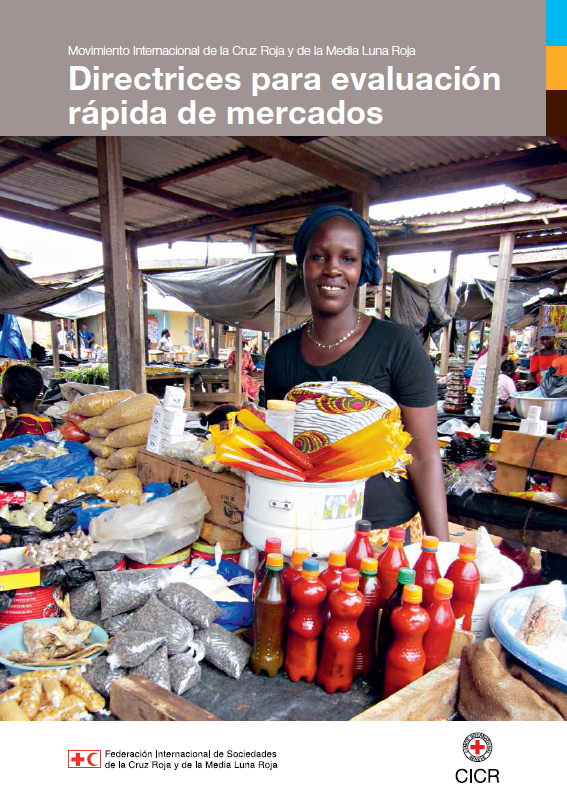
Directrices para evaluación rápida de mercados
En las economías de mercado contemporáneas, el sustento de las personas depende en gran medida de los mercados, así, por ejemplo, los granjeros venden sus productos a los consumidores o a comercios mayoristas o minoristas; los artesanos fabrican artículos que luego ve ...

Disaster Risk Reduction and Livelihoods
Disasters affect over 200 million people annually, numbers increasing due to climate change, causing significant loss of lives, forced migration, and disruption of livelihoods and institutions. The trend over the past 15–20 years points to a greater frequency of environmental, climatic, political, and economic hazards and therefore a growing risk for vulnerable populations worldwide. Disaster Risk Reduction programs and policies contribute to reduce the effects of disasters or shift the burden outside the affected community, yet there exist many gaps and unanswered questions.

El Potencial para la Ampliación y Sostenibilidad de los Seguros Basados en Indices Climáticos para la Agricultura y Subsistencia Rural
El riesgo es inherente a la agricultura. Los agricultores enfrentan una variedad de riesgos de producción y de mercado que hace que sus ingresos sean inestables e impredecibles de un año a otro.

El Proyecto Esfera: Carta Humanitaria y Normas Mínimas para la Respuesta Humanitaria
El Proyecto Esfera fue iniciado en 1997 por un grupo de organizaciones no gubernamentales (ONG) humanitarias y el Movimiento Internacional de la Cruz Roja y de la Media Luna Roja con el objetivo de mejorar la calidad de sus acciones durante las respuestas en casos de desastre y rendir cuentas acerca de ellas. El manual de 2018 consolida las mejores prácticas más recientes de cada sector poniendo a la población afectada en el dentro de la acción humanitaria

Emergency Food Security Interventions
This Good Practice Review explores programming practices in emergency food security. It provides a concise overview of conceptual issues and analytical and planning approaches, together with state-of-the-art programming practices in interventions designed to protect the food security of disaster - or crisis - affected groups.

Evaluación de la Acción Humanitaria Utilizando los Criterios del CAD-OCDE. Guía de ALNAP para Agencias Humanitarias.
Esta guía se desarrolló tras los debates mantenidos por la comunidad de evaluadores, y en ALNAP en particular, acerca de cómo fortalecer la práctica de la evaluación humanitaria y de cómo promover el uso más efectivo de los criterios de los criterios de evaluación del Comité de Ayuda al Desarrollo.

